German researchers are using AI to monitor wildlife and ecosystems across national parks. Data from more than 1,000 sensors helps identify species, track populations, and analyze forest growth.
Sensor networks are the plumbing. The analysis layer above them is the palace. Dutch environmental tech operators should watch who wins the data contract, not who built the camera.
Canadian AI lab Cohere is acquiring German firm Aleph Alpha, targeting regulated European sectors. Schwarz Group, a key Aleph Alpha backer, plans to invest $600 million in Cohere's upcoming Series E round.
Cohere is buying distribution and regulatory credibility, not just talent. Dutch public-sector and finance buyers now have a better-capitalized sovereign AI vendor at the table.
Canadian AI firm Cohere and German rival Aleph Alpha are merging to form a single enterprise AI competitor. The deal targets the dominance of US hyperscalers in global AI infrastructure.
Two capable builders who could not win alone are betting the combined operator beats the solo lab. European enterprise buyers are the ones who should move first.
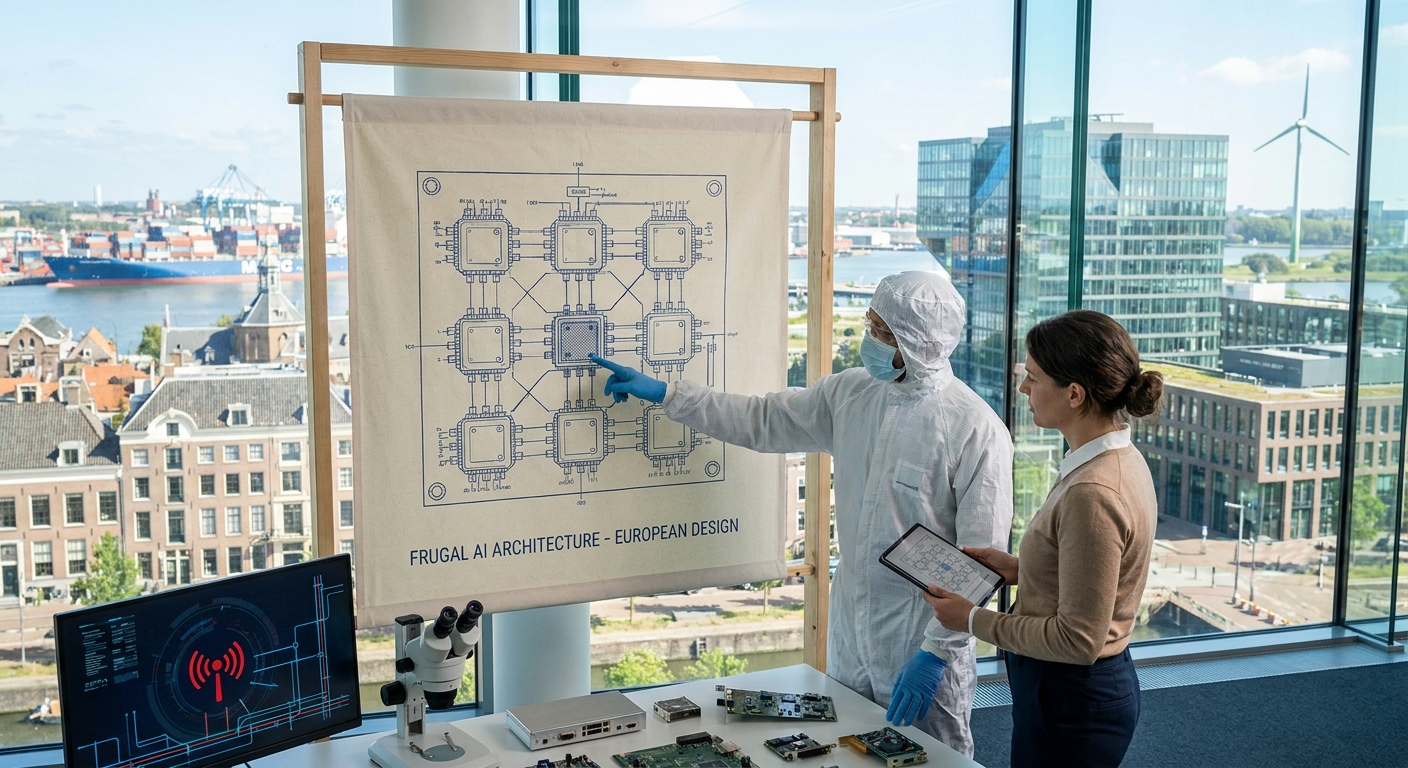
Dragon LLM CEO Olivier Debeugny argues Europe needs its own frugal AI architecture, not imported American models. He calls for a pan-European generative AI consortium modelled on Airbus.
Capability is not the argument here. Distribution and dependency are. Dutch industrial operators should watch whether sovereign AI sourcing becomes a contract requirement, not a preference.
A French AI startup is positioning itself as a European rival to OpenAI. The Economist profiles the company's ambitions to compete at the frontier model level.
Germany's armed forces are integrating AI to accelerate battlefield decision-making, drawing on four years of Ukrainian war data. Lieutenant General Freuding says current manual methods cannot break the enemy's decision cycle fast enough.
Capability is not the bottleneck here. Trusted, NATO-aligned outcomes are. Dutch defence suppliers and cloud operators with existing NATO clearances are the ones to watch.
Germany's AI in manufacturing market is forecast to reach $10.50 billion by 2030, up from $2.14 billion in 2026. The 35.8% CAGR is driven by Industry 4.0 adoption and smart manufacturing integration.
EU ambassadors backed Germany's push to exempt industrial machinery from the AI Act. The deal also delays high-risk AI restrictions by more than a year.
Rules written for all sectors rarely survive contact with heavy industry lobbying. Dutch manufacturers and AI operators should watch whether the machinery carve-out expands, shifting compliance cost onto software and service providers instead.
France's CNIL published updated guidance on 19 June 2025 permitting web scraping for AI training under GDPR's legitimate interest basis. The rules are not legally binding but carry regulatory authority and demand strict necessity and proportionality assessments.
Permission is not the bottleneck now. Documented justification is. Dutch operators who build scraping pipelines without proportionality records carry the real compliance risk.
France's CNIL has issued guidance targeting deepfakes and illegal AI-generated content. The regulator is drawing compliance lines that will affect operators across Europe.
Regulators are moving from observation to obligation. Dutch operators who treat deepfake compliance as a French problem will pay for that assumption when the Autoriteit Persoonsgegevens aligns.
France's data regulator CNIL has released English-language how-to sheets covering AI privacy compliance. The move extends the guidance beyond French-speaking operators to a broader European audience.
A French startup called Dragon LLM says it has built Europe's first original generative AI architecture. The design is described as frugal, departing from the standard transformer approach.
Capability claims are cheap. The test is whether an independent benchmark confirms the architecture, and whether a Dutch or EU cloud operator agrees to run it at scale.
Slator identifies ten LLMs that moved the needle in language AI over six months. GPT-4o, already integrated into Phrase, hits 232-millisecond audio response times relevant to live captioning and speech-to-speech applications.
Capability is moving fast; trust and distribution move slower. Dutch localization operators should watch which models win platform integrations, not which models top a leaderboard.
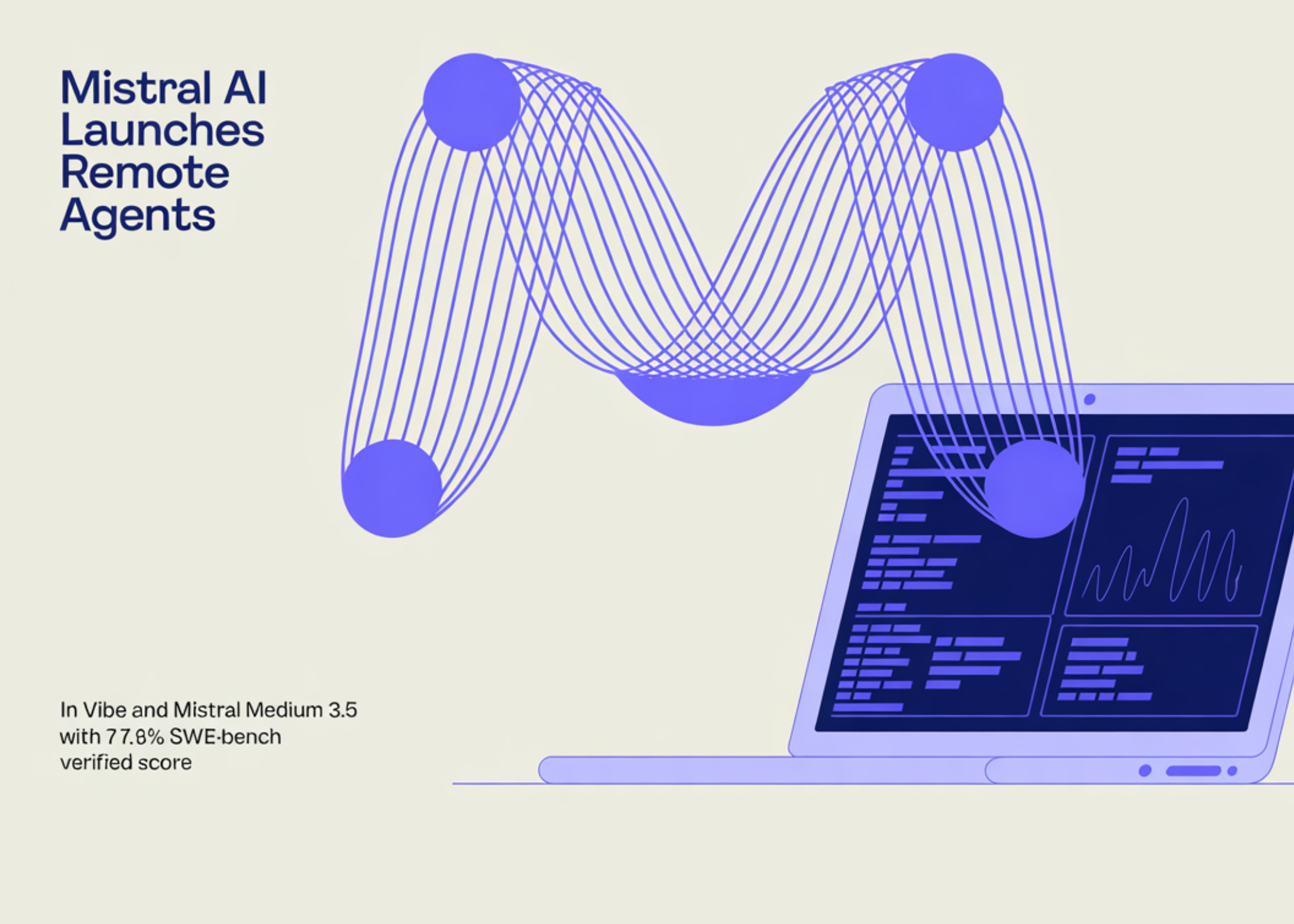
Mistral AI launched remote agents in Vibe, its coding platform, so sessions run in the cloud without tying up a developer's terminal. The new Mistral Medium 3.5, a 128B model, is now the default in both Vibe and Le Chat.
Local session versus cloud delegation: the developer stops being the bottleneck. Dutch operators building on open-weights infrastructure gain throughput without buying into a single cloud provider's agent stack.
Researchers found that adding a single sentence to AI prompts significantly increases model creativity. The finding, reported by VentureBeat, requires no model retraining or extra compute.
Capability without cost is the story. The buyer who masters prompt craft beats the lab that sells fine-tuning. Netherlands operators should test this before paying for the upgrade.
Twenty data protection authorities, including the Netherlands, signed a joint statement on trustworthy AI data governance at the Global Privacy Assembly in Seoul. The statement commits signatories to frameworks supporting both privacy protection and AI innovation.
A statement is not a rule, but twenty regulators agreeing on language is how rules start. Dutch AI operators should treat this as early sight of incoming compliance baselines, not a photo opportunity.
Nearly three-quarters of examined Dutch submissions to an EU consultation on stricter tobacco rules were fully written by AI and filed as apparent individual responses, an NOS and Pointer investigation found. Most trace back to a Philip Morris International campaign tool; nine in ten Dutch-language responses appear to originate from the company's system.
EU consultations assume the cost of writing a response filters for genuine conviction. Generative AI set that cost to zero and a tobacco company noticed first. Every future consultation, including the AI Act's own review cycles, now needs an authenticity layer or its legitimacy signal is gone.
Bernstein raised its price target on US-listed ASML shares to $2,623 from $1,971, implying 48 percent upside, and kept its outperform rating. Analyst David Dai cited an unprecedented AI-driven expansion in advanced logic and DRAM capacity. The stock rose in Monday premarket trading.
Wall Street is near-unanimous on ASML, which is comfortable and informationless. The useful signal is Dai's mechanism, DRAM adopting HNA EUV before logic. If memory makers hesitate on those orders, the whole 48 percent upside case rests on air.
The Dutch government submitted an international AI strategy to the House of Representatives on July 3. Ministers Berendsen, Sjoerdsma, and Aerdts outline diplomacy in Brussels, new coalitions with like-minded countries, and stronger European AI capacity as the three main lines of action.
A strategy with three lines of action and zero euros attached is a position paper. The real tell will be whether The Hague backs its sovereignty language with procurement and infrastructure money, or leaves the heavy lifting to Brussels.
Flexport is suing startup Freightmate AI, alleging former employees took thousands of shipping documents before founding the rival firm. The dispute centers on AI tools that classify bills of lading, invoices, and other shipment paperwork into clean, usable data.
The real asset here is not the model, it is the labeled data. Buyers should watch whether document provenance becomes a hard compliance requirement before any freight AI deal closes.